YouTube
La conversación completa, en vídeo.

¿Por qué puede resultar tan difícil desconectar, incluso cuando llega el momento de descansar? El Dr. Francisco Mira y Jessica Castejón exploran cómo el estrés afecta a la mente y al sueño, desde comprender nuestra respuesta al estrés hasta aprender a regularla de forma más eficaz.


Desde comprender por qué el estrés no siempre es el enemigo hasta
explorar qué nos ayuda realmente a descansar, descubra cuatro ideas clave de este episodio.

El estrés es una respuesta natural que puede ayudarnos a reaccionar, decidir y rendir. El reto no es eliminarlo, sino reconocer cuándo se prolonga demasiado y aprender a regularlo.
El cerebro recurre a patrones conocidos para ahorrar energía, pero esas respuestas automáticas no siempre nos ayudan. Ser conscientes de ellas es el primer paso para cambiar hábitos que ya no nos sirven.
Después de un día de activación constante, la mente no puede desconectar a voluntad. Reducir el ritmo de forma gradual mediante rutinas y rituales puede ayudar a preparar el cuerpo y la mente para el descanso.
Las horas de sueño son solo una parte. El estrés, el sueño fragmentado, la respiración y otros factores pueden influir en lo reparador que resulta el descanso, por lo que una evaluación adecuada es importante cuando las dificultades persisten.
EPISODIO 02
El estrés forma parte de la vida cotidiana. El reto no consiste necesariamente en eliminarlo, sino en comprender cómo respondemos a él, reconocer cuándo resulta difícil regularlo y dejar espacio para la recuperación.
En el segundo episodio de Conversations by ZEM, el Dr. Francisco Mira y Jessica Castejón unen las perspectivas de la neurología y la psicología para explorar el estrés, los comportamientos automáticos y el sueño, y por qué bajar el ritmo no siempre es tan sencillo como decidir desconectar.
El estrés es una respuesta natural que nos ayuda a reaccionar, tomar decisiones y adaptarnos a lo que sucede a nuestro alrededor. Los problemas pueden aparecer cuando ese estado de activación se prolonga demasiado o resulta difícil de regular.
En lugar de ver el estrés como algo contra lo que siempre debemos luchar o que debemos evitar, Mira y Castejón exploran la importancia de reconocerlo, comprender qué lo desencadena y aprender a responder de otra manera.
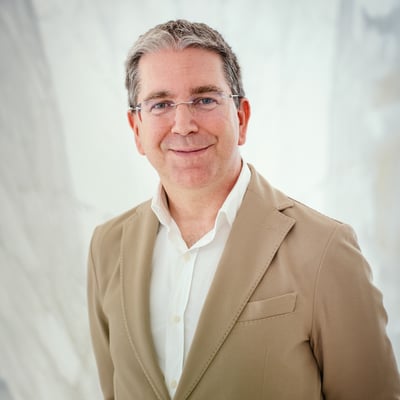
Dr Francisco Mira
Neurólogo y Director de Salud Cerebral
Gran parte de la vida cotidiana transcurre de forma automática. Las rutinas y los patrones conocidos permiten al cerebro funcionar de manera eficiente, pero también pueden llevarnos a repetir respuestas sin preguntarnos si siguen siendo útiles.
Tomar mayor conciencia de estos patrones abre la posibilidad de modificarlos. La conversación explora la importancia de prestar atención a cómo nos comportamos bajo estrés, en lugar de aceptar cada pensamiento o reacción como algo que necesariamente debemos seguir.
Un día de elevada activación no termina en el momento en que nos metemos en la cama. Los pensamientos, las tareas pendientes y las preocupaciones pueden acompañarnos durante la noche, dificultando pasar directamente de la actividad al descanso.
Dormir es un proceso gradual. Crear rutinas que reduzcan la estimulación, sacar de la mente los pensamientos pendientes y permitir que el cuerpo vaya bajando el ritmo progresivamente puede formar parte de la preparación para el descanso.

Jessica Castejón
Doctora en Psicología
Dormir más no significa necesariamente descansar mejor. El sueño interrumpido, la respiración, los hábitos cotidianos, el estrés y otros factores individuales pueden influir en lo reparador que resulta realmente el descanso nocturno.
Cuando las dificultades para dormir persisten, el episodio subraya la importancia de mirar más allá del propio síntoma. Comprender las rutinas diarias junto con la información clínica y relacionada con el sueño puede ofrecer una visión más completa de lo que puede estar afectando al descanso.
En ZEM Wellness Clinic Altea, neurología y psicología trabajan conjuntamente para comprender tanto los factores biológicos como los relacionados con la conducta que influyen en el estrés, el sueño y la recuperación.
Descansar mejor no empieza por obligar a la mente a desconectar. Empieza por comprender qué la mantiene activa.
Explore el episodio en inglés o en español. Las transcripciones se han editado para mejorar la claridad, manteniendo el sentido de la conversación.
00:00
Dr Francisco Mira
How much of what happens in our everyday lives, including at work, do you think comes down to poor stress management? Or, to put it another way, how many people come to us with physical symptoms or emotional experiences because we are not managing stress effectively?
Jessica Castejón
A lot. Many of the people who come to see us say they feel strange: “I can’t stop”, “I feel as though there aren’t enough hours in the day”, “my body can’t keep up”, “I’m more irritable”, or the classic one: “I can’t sleep”.
When I turn off the light, my mind switches on.
Everything starts running through my head: everything I need to do, everything I haven’t done, the argument that ended badly, what I should have said, sometimes even the shopping list.
Dr Francisco Mira
How often does the perfect response to an argument come to us two hours later?
Jessica Castejón
In bed, in the shower or in the car. You suddenly think: “That’s what I should have said”.
Dr Francisco Mira
Stress itself clearly isn’t bad. What matters is how long it lasts and how we manage it.
I always use the same example. Stress is a form of energy, rather like water. Channel water properly and it can irrigate a field and give us power. Channel it badly and it can destroy the land completely.
As a neurologist, I believe the traditional way we have approached stress makes no sense without psychology.
Jessica Castejón
Absolutely. One of the first problems is the language we use when we talk about stress. We speak about fighting stress or eliminating it.
But stress is also the spark that allows us to react, make decisions, move, feel motivated and stay alert. Without stress, life would be rather dull.
Dr Francisco Mira
There probably wouldn’t be life without stress. Ultimately, it is an evolutionary response to particular situations.
The body has needed mechanisms that allow it to identify threats and respond to them in the best possible way. Stress is first a neurological reaction, then a cognitive one and, almost simultaneously, a physical one.
It has helped us get to where we are today. Over thousands of years of evolution, people have experienced stress at certain moments and either responded better or avoided a threat.
So it isn’t always maladaptive. Stress can be useful. It is what allows us, for example, to be here now and perform at this level. But if we fail to channel it effectively, we have a problem.
And you cannot manage stress by denying it.
Jessica Castejón
We need to recognise it and make it an ally.
If we understand that stress has an adaptive function, we can use it as a catalyst for our energy, attention and alertness.
The key is learning to regulate its intensity rather than trying to deny it.
Dr Francisco Mira
We have also tended to medicalise everything. Medication for stress, medication for sleep, medication for this and medication for that, while less attention has been paid to regulation, planning, thought patterns and changing the way we think.
We are the country that consumes the most psychotropic medication in Europe, and possibly in the world. That is because we are not managing a fundamental emotion such as stress effectively.
Jessica Castejón
The negative side of stress appears when it creates suffering. When stress is poorly managed, it causes suffering, and one of our strategies as human beings is to avoid that suffering or look for the easiest way to make the discomfort disappear.
If I begin to suffer because of the difficulties stress is creating and I have a tablet that helps me, I may be able to suppress that activation and continue functioning. But I may also be distancing myself from a signal that tells me how I am responding to the demands around me.
Dr Francisco Mira
Ultimately, the tablet calms me down. It doesn’t help me resolve the underlying issue.
Those are very different things. Medication acts on the brain and can reduce anxiety for a period of time, but on its own it does not change a neural circuit, a habit, a behaviour or a thought. It calms you temporarily.
05:53
Dr Francisco Mira
Something else we see frequently in consultations is the “superman” or “superwoman”: “I’m not stressed. I can cope with everything.”
No. Nobody can cope with everything.
Biological systems have a certain capacity and a finite amount of energy that they can devote to different things. When we exceed that capacity, symptoms begin to appear in the body.
Jessica Castejón
When somebody comes into my consultation with that “I can cope with everything” attitude, I say: “Fine, you can cope with everything. Great.”
But when we look more closely at what coping with everything actually means, it can sometimes mean becoming rather like a robot: someone who does not feel, who avoids.
Chronic stress and chronic anxiety can distance us from our most human side.
Some of the first things stress leaves little room for are our ability to experience pleasure, recover and rest. Precisely the things that make us human and help us recharge.
07:09
Jessica Castejón
We often go through life on autopilot.
I always ask a trick question in consultations: “Do you remember what your shampoo smells like?”
Most people do not know or cannot remember, because we do so many things automatically that we become disconnected from what is happening within us.
Dr Francisco Mira
Automatic behaviour is fascinating from a neurological perspective.
We have a layer of the brain, the cortex, that is associated with voluntary control. But the brain is extremely efficient, perhaps even more efficient than it is intelligent.
Autopilot operates below the level of attention and conscious awareness. We function automatically according to the neural circuits we have built throughout our lives.
And that way of functioning is not necessarily good or efficient.
If you never analyse how you behave on autopilot, you cannot change it. And if you cannot change it, improvement is unlikely to occur.
One of the things I often tell people in consultations is that you shouldn’t always listen to your brain.
The brain is a fundamental organ. Your heart gives you biological life, but your brain can give you a full life.
But your brain is not you. It is your brain.
And you need to develop the ability to influence it.
Jessica Castejón
Exactly.
Dr Francisco Mira
That can be worked on through certain neurological techniques and through psychotherapy, with its different psychological approaches.
What does not work is continuing to do exactly the same thing: “I’m stressed, so I’ll have two glasses of wine.” The same thing tomorrow, the day after and five years from now.
When there is a headline saying that a drug may reduce dementia by 20 per cent, it is all over the newspapers. Yet controlling depression and stress could have a far greater impact, and that rarely makes the headlines.
Jessica Castejón
We also need to ask ourselves how much we are doing about the things we are actually responsible for.
How much are we understanding and addressing before reaching the point of needing psychotropic medication, when looking after our cognitive health or simply avoiding driving while our mind is somewhere else?
10:03
Dr Francisco Mira
There is a phrase we hear very often: “I don’t believe in psychologists.”
When we think somebody would benefit from seeing a psychology professional, they need to be willing to go. And sometimes, when you suggest it, the answer is: “I don’t believe in psychologists.”
And I think: how can you not believe in one of the options that may genuinely help you address what is happening?
Jessica Castejón
There is still a great deal of stigma surrounding our profession.
On one hand, there is the old-fashioned image of psychiatry that people have seen in films and on television. On the other, there is the classic image of Freud, the couch and a particular idea of therapy.
I see it differently. It is about having a conversation with someone. Sometimes simply hearing ourselves say out loud what is happening can already be therapeutic.
I see therapy as an opportunity to look inwards with somebody alongside you.
I often explain it like this: imagine you are somewhere you do not know and suddenly your GPS stops working. I might not be from there either, but perhaps my GPS has a little more battery left than yours. Let’s see how far we can get together.
You have to give yourself the opportunity.
Psychology is not a religion that you either believe in or do not believe in. It is another science, with a different approach, that can help in certain situations.
And there is also the human element: connection, feeling validated, attended to, listened to and cared for.
We are simply people talking to other people.
12:19
Dr Francisco Mira
And this brings us to sleep.
You spend the entire day with elevated levels of adrenaline, cortisol and noradrenaline, and then you expect to go to bed, close your eyes and have all of that suddenly disappear so you can sleep like a baby.
That cannot happen.
The only way to make it happen immediately would be to use another substance to counteract the first one. But ultimately, that is rather like painting a wall that has a leak.
Tomorrow you will have to paint it again, and the day after that you will have to do the same.
We have often treated difficulty sleeping purely as a medical problem, when it may have a different origin and be related to neurotransmitters and to the momentum that has built throughout the day.
A boat can switch off its engine and still continue moving.
We have a chemical momentum from everything that has happened during the day as well.
If I am stressed, go to the gym at nine in the evening and come home at half past ten with higher cortisol and adrenaline levels than when I left...
Jessica Castejón
Then I have a cold shower and watch an action film before bed.
Dr Francisco Mira
With my phone in my hand. And afterwards I say: “I can’t sleep.”
Jessica Castejón
Our adrenaline, noradrenaline and cortisol are running high and we would love to be able to unplug ourselves instantly, but it does not work like that.
Sleep is a gradual process. We need to reduce that activation progressively.
I explain it using the example of a car. If stress has us travelling at 180 kilometres per hour, going to sleep would be the equivalent of applying the brakes.
You cannot stop instantly. You need to regulate all that activation gradually.
That is why a sleep routine is important, just as it is with children. We do not actually teach children to sleep. We teach them to regulate themselves, gradually slow down and find activities and rituals that allow the body to move progressively towards a state of relaxation.
The aim is not to depend on a substance to do all the work, because tolerance and dependence can develop.
15:21
Dr Francisco Mira
There is also an important difference between sleeping and resting.
They are not necessarily the same thing.
In many sleep disorders, we see people who simply want to sleep for longer.
But sleeping longer does not always mean resting better.
Jessica Castejón
Exactly. Some people say: “I sleep for eight or nine hours and wake up feeling as though I’ve been hit by a train.”
In that case, you have slept, but you have not rested.
Dr Francisco Mira
That is where sleep studies can be important for people who are experiencing difficulties.
Sometimes somebody says: “I don’t sleep.” More often, what they mean is that they struggle to fall asleep, sleep for too little time or wake repeatedly.
Because if you genuinely had not slept for ten years, you would have died.
Then there are people who sleep for nine hours, but when we carry out a sleep study we see that every three minutes their brain has to wake up or reach a sufficient level of awareness to stop them from ceasing to breathe and activate a survival mechanism.
If I were sleeping next to you and elbowed you every three minutes, how long would it take you to throw me out of bed?
Jessica Castejón
Not long.
Dr Francisco Mira
Exactly.
And yet sometimes we medicate ourselves in a way that suppresses that defence mechanism.
Jessica Castejón
We are effectively teaching the body to tolerate poor-quality sleep.
Dr Francisco Mira
That is why relatively few of the sleep studies we carry out are completely normal.
17:17
Dr Francisco Mira
Sometimes the problem can improve through a change in sleeping position, losing some weight, using a device that supports sleep or working with vagus nerve stimulation before bed.
Again, the apparently easy answer is not always a genuine solution.
And I come back to the same point: repair does not occur in the same way under certain medications.
Jessica Castejón
The approach I often take in consultations with patients who are taking medication is that the goal should be for them to learn to produce the regulatory effect that the medication is currently providing.
We want to help them regulate their nervous system so that they do not have to depend on it.
Medication may be kept for specific situations, but we should also train the mind and body to enter a state of relaxation and, importantly, prevent the brain from interpreting that relaxation as a threat.
When we have been living with chronic stress for a long time, we can become so accustomed to functioning at very high levels of activation that, when we try to slow down, the brain interprets that change as something unfamiliar and activates the alert response again.
Dr Francisco Mira
Then there is the person who says: “I fall asleep, but I wake up at three in the morning.”
There may be a disruption in the cortisol rhythm that causes the body to activate waking mechanisms earlier than it should, and that can be the moment when you start thinking about precisely the thing that is worrying you most.
So the approach is not always the one we have traditionally assumed.
There is another very important issue. While we sleep, the brain is involved in processes that help clear proteins and waste products.
There is a system known as the glymphatic system that participates in this clearance and is important for brain health.
That is why sleep is an area we need to work on carefully, while also understanding that resting, sleeping and repairing are not exactly the same thing.
The brain needs rest.
And many of the things we do in our everyday lives, particularly in modern society, work directly against that rest.
Jessica Castejón
And if we do not sleep, we do not function.
20:07
Dr Francisco Mira
In general, anyone experiencing persistent difficulty sleeping needs a thorough assessment, because quick and simple answers are rarely the right ones.
You need to ask a great deal about their everyday life: what their schedule looks like and what they are doing at different times of the day.
Blood tests may also be needed. Thyroid hormones and other activation-related parameters may need to be assessed.
And, where appropriate, we carry out a sleep study to understand what is happening with the brain, heart rate, blood pressure, breathing and sleeping position throughout the night.
Ultimately, there is a considerable amount of information that needs to be brought together, while always considering the kind of life the guest leads, so that we can try to offer solutions that genuinely make a difference.
Simply taking a different box of tablets does not resolve the problem.
This is also where habits and the tools you use in psychology become important: how to manage the routine that leads into sleep and what to do if sleep is interrupted and you wake earlier than expected.
Jessica Castejón
The first step is an assessment and understanding how the brain works and how that individual functions during the day.
Then we can look at their routine before bed and at how they gradually regulate themselves and slow down.
We often recommend rituals that help take worries out of the mind: making a list, writing down something that is still pending or assigning it a specific time.
When our sleep is interrupted, we often do exactly what is least helpful: we force ourselves to go back to sleep.
That puts us in an even more stressful situation. We look at the clock: “I’ve been awake for fifteen minutes. I have fewer and fewer hours left to sleep...”
Sometimes it is much easier to surrender, stop trying to control sleep and allow the body to regulate itself and return to sleep naturally.
Watching the clock, counting the minutes and worrying simply feeds the same stress that may have woken us in the first place.
Sometimes thinking about something boring or counting backwards can be enough to help us find that balance again.
But what we usually do is the opposite: “I have to fall asleep now. I need to try harder to sleep.”
You cannot fight stress. As we have said, we need to learn how to relate to it.
23:00
Dr Francisco Mira
It has been really interesting to have this conversation and to sit around the same table as colleagues who work side by side every day here at ZEM, trying to help the brain, rest and recovery function better.
I hope we can have many more conversations together and with everyone listening, and explore other fascinating subjects from our respective areas of expertise.
Thank you very much, Jessica.
Jessica Castejón
Thank you. And yes, I hope this is the first of many.
Dr Francisco Mira
Absolutely.
00:00
Dr. Francisco Mira
¿Cuánto de nuestro día a día, también en el trabajo, crees que se debe a una mala gestión del estrés? O, planteado de otra manera, ¿cuánta gente nos busca porque tiene síntomas físicos o sensaciones emocionales porque no estamos sabiendo gestionar bien el estrés?
Jessica Castejón
Mucha. Muchas de las personas que llegan a consulta dicen sentirse raras: «No puedo parar», «siento que no me da la vida, no me da el cuerpo», «estoy más irritable» o la típica: «No puedo dormir».
Y es que, cuando apago la luz, se me enciende la cabeza.
Empieza todo: lo que tengo que hacer, lo que no he hecho, aquella discusión que terminó mal, lo que podría haber dicho y, a veces, hasta la lista de la compra.
Dr. Francisco Mira
¿Cuántas veces se nos ocurre la respuesta genial a una discusión dos horas después?
Jessica Castejón
En la cama, en la ducha o en el coche. Es como: «Tenía que haber dicho esto».
Dr. Francisco Mira
Está claro que el estrés en sí mismo no es malo. Lo que es malo es cuánto dura ese estrés y cómo lo canalizamos.
Siempre pongo el mismo ejemplo: es una energía, como el agua. El agua bien canalizada puede regar un campo y darnos luz; mal canalizada puede destruir un terreno completamente.
Como neurólogo, veo que el abordaje clásico que hemos hecho del estrés no tiene ningún sentido sin la psicología.
Jessica Castejón
Así es. Uno de los primeros errores está precisamente en la narrativa con la que abordamos el estrés. Hablamos de combatirlo o eliminarlo.
Pero el estrés también es esa chispa que nos permite reaccionar, decidir, movernos, motivarnos y mantenernos alerta. Sin estrés, la vida sería un poco aburrida.
Dr. Francisco Mira
Seguramente no habría vida sin estrés. Al final, no es más que una respuesta evolutiva ante determinadas situaciones.
El cuerpo ha necesitado mecanismos que le permitieran identificar amenazas y responder a ellas de la mejor manera. El estrés es primero una reacción neurológica, después de pensamiento y, prácticamente al mismo tiempo, corporal.
Nos ha permitido llegar hasta aquí. Después de miles de años de evolución, estamos aquí porque ha habido personas que se han estresado en determinados momentos y han respondido mejor o han evitado una amenaza.
No siempre es algo desadaptativo. El estrés puede ser bueno. Es lo que nos permite, por ejemplo, estar aquí ahora rindiendo a este nivel. Pero, si no lo canalizamos, tenemos un problema.
Y el estrés no se canaliza negándolo.
Jessica Castejón
Hay que reconocerlo y convertirlo en un aliado.
Si entendemos que el estrés tiene una función adaptativa, podemos utilizarlo como catalizador de nuestra energía, nuestra atención y nuestro estado de alerta.
La clave está en conseguir regular su intensidad, más que en negarlo.
Dr. Francisco Mira
También hemos tendido a medicalizarlo todo. Fármacos para el estrés, para dormir, para esto o para lo otro, mientras se ha trabajado menos la canalización, la planificación, la estructura y el cambio del pensamiento.
Somos el país que más psicofármacos consume de Europa y posiblemente del mundo. Y eso ocurre porque no estamos sabiendo dar salida a una emoción fundamental como es el estrés.
Jessica Castejón
La parte negativa del estrés aparece cuando genera sufrimiento. Cuando no se gestiona bien, genera sufrimiento, y una de nuestras estrategias como seres humanos es intentar evitarlo o buscar la vía más fácil para que no nos duela.
Si empiezo a sufrir las dificultades que me genera el estrés y tengo una pastilla que me ayuda, puedo apagar esa activación y seguir funcionando. Pero, de alguna manera, también me estoy separando de esa señal que me indica cómo estoy respondiendo a las demandas del entorno.
Dr. Francisco Mira
Al final, la pastilla me calma, no me ayuda.
Son cosas diferentes. Los medicamentos actúan a nivel cerebral y pueden disminuir la ansiedad durante un tiempo, pero no cambian por sí solos un circuito neuronal, un hábito, una conducta o un pensamiento. Lo que hacen es calmarte durante un rato.
05:53
Dr. Francisco Mira
Otra cosa que vemos mucho en consulta es el «superhombre» o la «superheroína»: «Yo no tengo estrés. Yo puedo con todo».
No. Nadie puede con todo.
Los sistemas biológicos tienen una capacidad y una energía que pueden invertir en determinadas cosas. Cuando sobrepasamos esa capacidad, empiezan a aparecer síntomas en el cuerpo.
Jessica Castejón
Cuando llega a mi consulta alguien con ese «yo puedo con todo», digo: «Vale, puedes con todo, fenomenal». Pero, cuando profundizamos en qué significa realmente poder con todo, muchas veces implica convertirse en un robot: una persona que no siente, que evita.
El estrés crónico y la ansiedad crónica pueden separarnos de nuestra parte más humana.
Lo primero a lo que el estrés deja menos espacio es a la capacidad de sentir placer, recuperarnos y descansar. Precisamente aquello que nos hace humanos y que nos permite recargar energía.
07:09
Jessica Castejón
Muchas veces estamos funcionando en piloto automático.
Siempre hago una pregunta trampa en consulta: «¿Recuerdas a qué huele tu champú?».
La mayoría de las personas no lo sabe o no lo recuerda, porque hacemos tantas cosas de forma automática que terminamos desconectados de lo que tenemos dentro.
Dr. Francisco Mira
El tema de los automatismos es muy interesante desde el punto de vista neurológico.
Tenemos una capa cerebral, la corteza, relacionada con la voluntariedad. Pero el cerebro es muy eficiente, incluso más eficiente que inteligente.
El funcionamiento en piloto automático ocurre por debajo del nivel de atención y consciencia. Funcionamos automáticamente según los circuitos neuronales que hemos creado a lo largo de nuestra vida.
Y ese sistema de funcionamiento no tiene por qué ser necesariamente bueno o eficiente.
Si no analizas cómo te comportas en piloto automático, no puedes modificarlo. Y, si no puedes modificarlo, difícilmente habrá una mejoría.
Una de las cosas que siempre digo en consulta es que al cerebro no siempre hay que hacerle caso.
El cerebro es un órgano fundamental. El corazón te da vida biológica, pero el cerebro puede darte una vida plena.
Pero él no eres tú. Él es él.
Y tú tienes que tener capacidad para influir sobre él.
Jessica Castejón
Así es.
Dr. Francisco Mira
Eso se puede trabajar desde determinadas técnicas neurológicas y desde la psicoterapia, con sus diferentes corrientes.
Lo que no funciona es seguir haciendo siempre lo mismo: «Estoy estresado y me tomo dos copas de vino». Mañana igual, pasado mañana igual y dentro de cinco años igual.
Cuando aparece un titular diciendo que un fármaco puede reducir la demencia un 20 %, abre los periódicos. Sin embargo, controlar la depresión y el estrés podría tener un impacto muchísimo mayor, y eso no suele ocupar los titulares.
Jessica Castejón
Y también tenemos que preguntarnos cuánto hacemos nosotros con aquello de lo que somos responsables.
¿Cuánto estamos entendiendo y atendiendo para intentar evitar llegar a un psicofármaco, cuidar nuestra salud cognitiva o simplemente evitar ir conduciendo con la mente en otra parte?
10:03
Dr. Francisco Mira
Hay una frase que escuchamos mucho: «No creo en los psicólogos».
Cuando necesitamos que participe un profesional de la psicología, necesitamos que la persona vaya. Y, a veces, planteas esa posibilidad y la respuesta es: «No creo en los psicólogos».
Y pienso: ¿cómo no vas a creer en una de las opciones que realmente puede ayudarte a resolver lo que te está ocurriendo?
Jessica Castejón
Hay mucho estigma alrededor de nuestra profesión.
Por un lado, está esa imagen antigua de la psiquiatría que hemos visto en películas y televisión. Por otro, la imagen clásica de Freud, el diván y una determinada idea de la terapia.
Pero yo lo veo de otra manera. Se trata de tener una conversación con alguien. Muchas veces, incluso escucharnos decir en voz alta lo que nos ocurre ya puede resultar terapéutico.
Lo veo como una oportunidad para mirar hacia dentro acompañados por alguien.
Yo explico la terapia de esta manera: imagina que estás en un lugar que no conoces y, de repente, se apaga tu GPS. A lo mejor yo tampoco soy de allí, pero mi GPS tiene un poco más de batería que el tuyo. Vamos a intentar ver juntos hasta dónde llegamos.
Hay que darse la oportunidad.
La psicología no es una religión en la que creamos o dejemos de creer. Es otra ciencia, con un enfoque diferente, que en determinadas situaciones puede ayudar.
Y también está el lado humano: la conexión, sentirse validado, atendido, escuchado y cuidado.
Somos personas normales hablando con otras personas.
12:19
Dr. Francisco Mira
Y aquí entramos en el sueño.
Llevas todo el día con niveles elevados de adrenalina, cortisol y noradrenalina, y tu expectativa es acostarte, cerrar los ojos y que de repente todo desaparezca y duermas como un bebé.
Eso no puede pasar.
La única manera de hacerlo de forma inmediata sería utilizando otra sustancia que neutralizara la primera. Pero, al final, es como pintar una pared que tiene una gotera.
Mañana vas a tener que volver a pintarla y pasado mañana otra vez.
Muchas veces hemos abordado la dificultad para dormir exclusivamente como un problema médico, cuando puede tener otra naturaleza y estar relacionada con la lógica de los neurotransmisores y con la inercia que lleva todo el día.
Un barco apaga el motor y sigue moviéndose.
Nosotros también tenemos una inercia química de todo el día.
Si estoy estresado, me voy al gimnasio a las nueve de la noche y vuelvo a casa a las diez y media con niveles de cortisol y adrenalina más altos que cuando me fui...
Jessica Castejón
Me doy una ducha fría y después veo una película de acción antes de dormir.
Dr. Francisco Mira
Y con el móvil en la mano. Y luego digo: «No duermo».
Jessica Castejón
Tenemos la adrenalina, la noradrenalina y el cortisol a tope y nos gustaría poder desenchufarnos de repente, pero no funciona así.
Dormir es un proceso paulatino. Tenemos que ir reduciendo progresivamente la activación.
Yo lo explico con un coche. Si vamos a 180 kilómetros por hora porque el estrés nos lleva a esa velocidad, dormir sería equivalente a pisar el freno.
No podemos detenernos inmediatamente. Tenemos que regular toda esa activación de manera progresiva.
Por eso es importante tener una rutina de sueño, igual que hacemos con los niños. En realidad, no les enseñamos a dormir; les enseñamos a regularse, a bajar revoluciones y a encontrar actividades y rituales que poco a poco permitan que el cuerpo llegue a un estado de relajación.
El objetivo es no depender de una sustancia que haga todo el trabajo, porque pueden aparecer tolerancia y dependencia.
15:21
Dr. Francisco Mira
Y está también la diferencia entre dormir y descansar.
No son necesariamente equivalentes.
En muchos trastornos del sueño vemos personas que quieren dormir más.
Pero dormir más no siempre es descansar mejor.
Jessica Castejón
Exactamente. Hay personas que dicen: «Duermo ocho o nueve horas y me despierto como si me hubiese atropellado un tren».
Entonces, has dormido, pero no has descansado.
Dr. Francisco Mira
Ahí entra la necesidad de hacer estudios de sueño en personas que tienen dificultades.
A veces alguien dice: «No duermo». Normalmente, lo que ocurre es que le cuesta dormir, duerme poco o se despierta muchas veces.
Porque, si realmente no hubieras dormido durante diez años, habrías muerto.
Después está la persona que duerme nueve horas, pero cuando hacemos un estudio del sueño vemos que cada tres minutos su cerebro necesita despertarse o alcanzar un determinado nivel de consciencia para evitar dejar de respirar y activar un mecanismo de supervivencia.
Si yo durmiera contigo y cada tres minutos te diera un codazo, ¿cuánto tardarías en echarme de la cama?
Jessica Castejón
Poco.
Dr. Francisco Mira
Muy poco.
Y, sin embargo, a veces nos medicamos para apagar ese mecanismo de defensa.
Jessica Castejón
Estamos enseñando al organismo a soportar una mala calidad del sueño.
Dr. Francisco Mira
Por eso son pocos los estudios de sueño que hacemos que resultan completamente normales.
17:17
Dr. Francisco Mira
A veces el problema puede mejorar con un cambio de postura, perdiendo algo de peso, utilizando un dispositivo que ayude a descansar o trabajando sobre el nervio vago antes de dormir.
De nuevo, la solución aparentemente fácil no siempre es una solución real.
Y vuelvo al mismo mensaje: la reparación no ocurre de la misma manera bajo determinados medicamentos.
Jessica Castejón
La línea que suelo seguir en consulta con pacientes que están medicados es que el objetivo sea que ellos mismos aprendan a conseguir el efecto de regulación que está haciendo la medicación.
Que aprendamos a regular su sistema nervioso para que no tengan que depender de ella.
La medicación puede reservarse para momentos concretos, pero también debemos entrenar la mente y el cuerpo para entrar en un estado de relajación y, sobre todo, conseguir que el cerebro no codifique esa relajación como una amenaza.
Cuando llevamos mucho tiempo bajo estrés crónico podemos acostumbrarnos tanto a hiperfuncionar que, cuando intentamos bajar las revoluciones, el cerebro interpreta ese cambio como algo extraño y vuelve a activar el estado de alerta.
Dr. Francisco Mira
También está la persona que dice: «Me duermo, pero me despierto a las tres de la mañana».
Puede haber una alteración del ritmo del cortisol que haga que el cuerpo active antes de tiempo los mecanismos relacionados con el despertar y, en ese momento, empieces a pensar precisamente en aquello que más te preocupa.
Por eso el abordaje no siempre es el que tradicionalmente hemos entendido.
Y hay otra cuestión muy importante. Mientras dormimos, el cerebro está trabajando en procesos relacionados con la eliminación de proteínas y productos de desecho.
Existe un sistema denominado sistema glinfático que participa en esa limpieza y que es esencial para la salud cerebral.
Por eso el sueño es un área en la que hay que trabajar mucho y bien, entendiendo además que descansar, dormir y reparar no significan exactamente lo mismo.
El cerebro necesita descansar.
Y muchas de las cosas que hacemos en nuestro día a día, especialmente en la sociedad actual, van precisamente en contra de ese descanso.
Jessica Castejón
Y, si no dormimos, no funcionamos.
20:07
Dr. Francisco Mira
En general, cualquier persona que tiene dificultades persistentes para dormir necesita una evaluación seria, porque las respuestas fáciles y cortas no suelen ser las correctas.
Hay que preguntar mucho sobre su día a día: cómo son sus horarios y qué hace en cada momento.
También pueden ser necesarios análisis de sangre. Hay que valorar las hormonas tiroideas y otros parámetros de activación.
Y, cuando corresponde, realizar un estudio del sueño para entender qué ocurre con el cerebro, el ritmo cardíaco, la presión arterial, la respiración y la posición durante la noche.
Al final, tenemos mucha información que debemos poner en conjunto, entendiendo siempre el tipo de vida que lleva el huésped, para intentar ofrecer soluciones que realmente marquen la diferencia.
Tomar simplemente otra caja de pastillas diferente no resuelve el problema.
Aquí también entra la parte de los hábitos y las herramientas que trabajáis en psicología: cómo gestionar la rutina de entrada en el sueño y qué hacer cuando el sueño se interrumpe y nos despertamos antes de tiempo.
Jessica Castejón
Lo primero es realizar una evaluación y comprender cómo funciona el cerebro y cómo funciona la persona durante el día.
Después podemos observar la rutina previa a acostarse y cómo va regulándose y reduciendo las revoluciones.
Solemos aconsejar rituales que ayuden a sacar las preocupaciones de la cabeza: hacer una lista, apuntar algo pendiente o asignarle un momento concreto.
Cuando el sueño se fragmenta, muchas veces hacemos precisamente lo que menos nos conviene: obligarnos a volver a dormir.
Entramos entonces en una situación todavía más estresante. Miramos el reloj: «Llevo quince minutos despierto, cada vez me quedan menos horas para dormir...».
A veces es mucho más sencillo rendirse, dejar de intentar controlar el sueño y esperar a que el cuerpo vuelva a autorregularse.
Mirar el reloj, contabilizar el tiempo y preocuparnos alimenta el mismo estrés que puede habernos despertado.
A veces pensar en algo aburrido o hacer una cuenta atrás puede ayudarnos a recuperar ese equilibrio.
Lo que solemos hacer es exactamente lo contrario: «Ahora tengo que dormirme. Tengo que esforzarme por dormir».
Pero con el estrés no se pelea. Como hemos dicho, tenemos que aprender a relacionarnos con él.
23:00
Dr. Francisco Mira
Ha sido muy interesante tener esta conversación y sentarnos juntos quienes trabajamos codo con codo cada día aquí en ZEM, intentando que el cerebro, el descanso y la recuperación funcionen mejor.
Ojalá podamos tener más conversaciones juntos y con toda la audiencia, y abordar otros temas muy interesantes desde nuestras respectivas especialidades.
Muchísimas gracias, Jessica.
Jessica Castejón
Muchas gracias a ti. Espero que sea la primera de muchas.
Dr. Francisco Mira
Sin duda.
Descubra ZEM Neuro Balance, un programa personalizado diseñado para favorecer la regulación del sistema nervioso, reducir el impacto del estrés prolongado y mejorar el sueño, la claridad mental y el equilibrio emocional.
Suscríbase a la newsletter de ZEM para estar al día de los nuevos episodios de Conversations by ZEM y descubrir más sobre salud, bienestar y longevidad mediterránea.